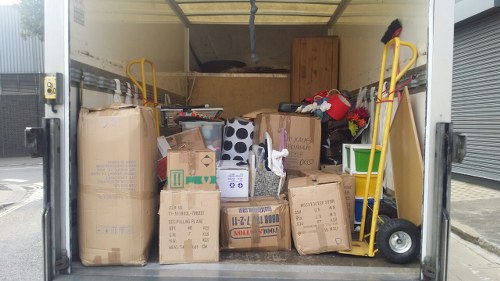
Commercial Waste Removal Canary Wharf: Recycling and Sustainability
Commercial Waste Removal Canary Wharf is evolving to meet the needs of a busy financial district with a clear focus on an eco-friendly waste disposal area and a resilient sustainable rubbish area. Our approach balances high-volume collection logistics with environmentally responsible practices. In this commercial district, businesses, property managers and estates seek practical solutions that reduce landfill, increase recycling rates and demonstrate corporate responsibility. This page outlines targets, local infrastructure, partnerships and fleet strategies that support greener operations in Canary Wharf and nearby boroughs.
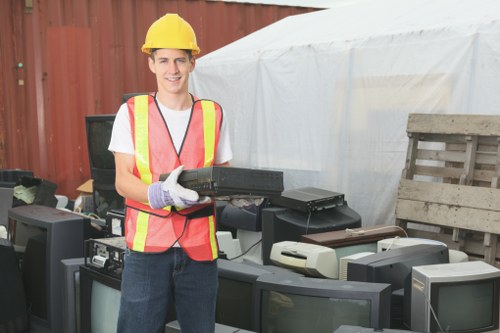 The Canary Wharf area operates within the wider waste management frameworks of the London Borough of Tower Hamlets and neighbouring boroughs, which adopt progressive waste separation schemes. These boroughs generally encourage separation of paper and card, glass, mixed plastics, cans, and organic food waste, and local commercial services align with those municipal streams. By coordinating with municipal collection calendars and recycling standards, commercial waste disposal Canary Wharf services ensure collected materials are processed through appropriate channels rather than ending up in residual waste.
To measure progress in creating a truly sustainable rubbish area, we set a clear recycling percentage target. Our current goal for the commercial sector in Canary Wharf is to divert 75% of recyclable and compostable material away from landfill within five years. This target covers paper and card, glass, metals, plastics, and food/organic waste from canteens and catering operations in offices and retail spaces. Achieving this requires consistent segregation at source, dedicated containers for each stream, and close monitoring of contamination rates.
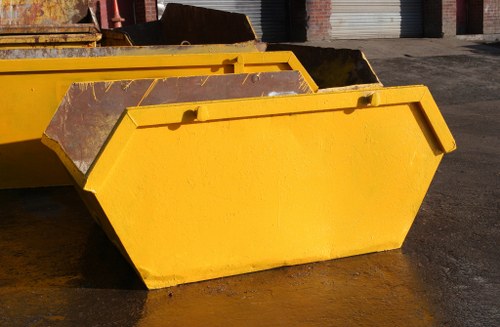 Local transfer stations play a pivotal role in turning Canary Wharf into an effective eco-friendly waste disposal area. Transfer facilities located within easy driving distance act as consolidation hubs where segregated commercial loads are bulked and routed to specialised treatment plants—materials for recycling, anaerobic digestion for food waste, and authorised recovery facilities for other streams. These transfer stations help cut transport distances, reduce double-handling of waste, and lower carbon emissions associated with routing to distant facilities.
Beyond infrastructure, partnerships are essential. We work with local charities and reuse organisations to extract value from items suitable for refurbishment or redistribution. Furniture, office supplies, and surplus electronics are catalogued and offered to community projects and registered charities that operate in Tower Hamlets and adjacent boroughs. These charity partnerships reduce landfill, foster social benefit, and support circular economy principles by extending product life cycles.
Our fleet strategy is another cornerstone of creating a low-impact commercial waste removal Canary Wharf service. We deploy a mix of low-carbon vans and electric-led vehicles for collections within the district, prioritising hybrids and battery-electric models for short-haul rounds and smaller pickups. By using lower-emission vehicles on busy urban routes, we reduce local air pollution and meet London’s stringent environmental standards. Strong maintenance regimes and eco-driving training further improve fuel efficiency and cut operational emissions.
Practical recycling activity in Canary Wharf includes targeted streams that reflect the area’s commercial profile: segregated paper and card from banking and finance offices, glass and mixed recyclables from cafes and retail units, and separate food waste collections from restaurants and staff kitchens. We also manage secure confidential waste streams for sensitive documents, ensuring materials are shredded and recycled where possible, and electronic waste is handled through certified WEEE processors. A short list of key service elements includes:
- Source separation: distinct containers for paper, plastics, glass, metals, and organics
- Scheduled collections tailored to business peaks and off-peak low-emission rounds
- Recycling targets and contamination reduction programmes
- Re-use pathways through charity partnerships and corporate donation schemes
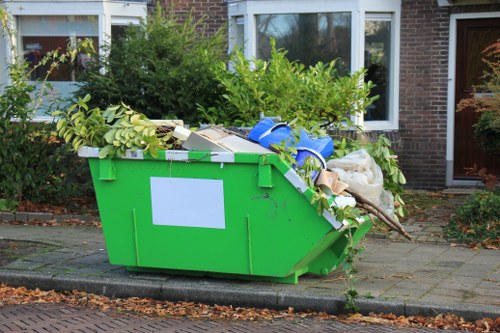 Creating a sustainable rubbish area in Canary Wharf also requires robust reporting and transparency. Businesses can access regular recycling performance reports showing tonnes diverted from landfill, contamination rates, and carbon savings attributable to low-carbon vans and route optimisation. These metrics support corporate sustainability commitments and help facilities teams fine-tune their operational practices to reach the 75% diversion target.
Engagement with borough policies is important: Tower Hamlets and neighbouring councils promote separate food waste schemes and mixed recycling, and commercial waste solutions adapt to those rules. Collaboration with local authorities enhances compliance and ensures commercial collectors feed materials into the correct municipal or specialist recovery streams. For companies operating across boundaries, coordinated multi-borough plans make sustainable waste disposal across Docklands and East London pragmatic and efficient.
Sustainable outcomes and continuous improvement
Long-term vision for an eco-friendly Canary Wharf
Delivering a reliable, low-impact commercial waste collection service means combining practical logistics with community-centred initiatives. Our vision is an adaptable commercial waste management network in Canary Wharf that meets business needs while supporting circular economy principles: higher reuse, better recycling rates, reduced carbon from collections, and strengthened links with charities and social enterprises. Continuous investment in low-carbon vans, route optimisation software, and local transfer station capacity will underpin steady progress toward our recycling targets and a greener urban district.
